The Mom-Curated Nursery: A Minimalist's Guide to Baby Toy Selection in 2026
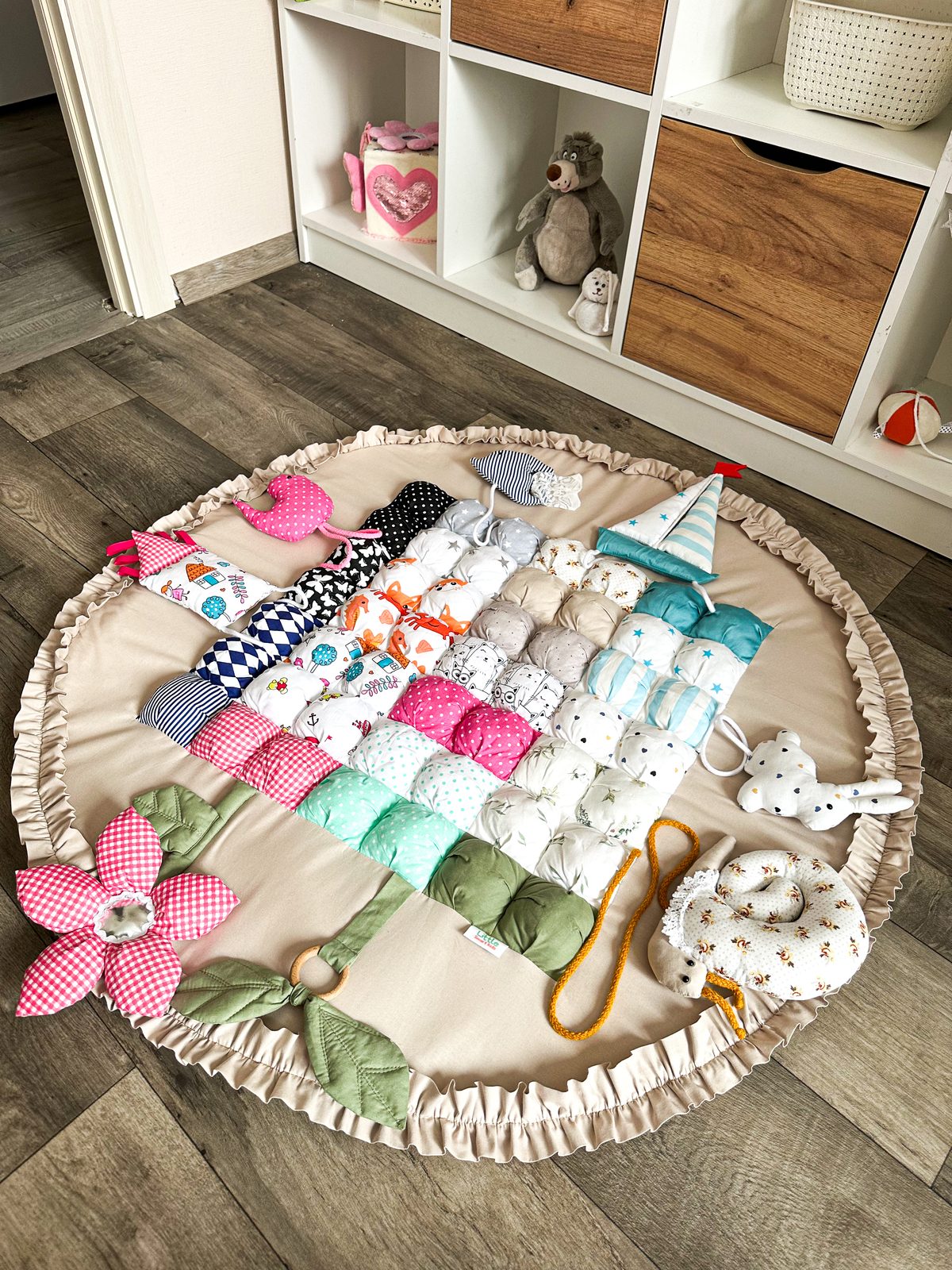
Walk into most American nurseries today and you'll see the same scene: a mountain of plastic toys in primary colors, a play mat half-buried under stuffed animals, and a frazzled mom wondering why her baby still gravitates to the kitchen spoon.
There's a movement growing among thoughtful American moms — and it's not anti-toy. It's anti-clutter. It's the curated nursery: a calm, intentional space where every toy earns its place, and where less actually delivers more development.
Why More Toys Don't Mean More Development
Research consistently shows that babies engage more deeply when given fewer, higher-quality toys. A 2018 study from the University of Toledo found that toddlers played longer and more creatively with four toys than with sixteen. With sixteen, they bounced from one to the next, never sinking into focused play.
It's the same logic that makes a quiet, well-lit reading nook feel more inviting than a cluttered library. Babies don't process toys the way we process bookshelves — they engage with whatever is in front of them, and overload leads to disengagement.
The 5 Principles of Mom-Curated Toy Selection
1. Multi-Sensory Over Single-Function
A toy that does one thing — like a rattle that only rattles — gets old fast. A toy that engages multiple senses (touch, sound, sight, movement) holds attention across stages and ages.
This is why a handmade sensory mat with built-in rattles, squeakers, rustling petals, and tactile zones beats five separate single-purpose toys. One thoughtful piece replaces a basket of forgotten ones.
2. Materials Matter More Than Marketing
If you find yourself drawn to a toy because of bright colors or a catchy slogan on the package, pause. Then ask: what is it actually made of?
Natural cotton, smooth wood, soft cotton fabric — these textures invite hands and mouths back again and again. Hard plastic with a sticker on the front rarely does.
3. Made to Last, Not Made to Toss
The disposable economy has reached baby toys. Many products are designed to be used for six months and then donated or trashed. A curated nursery thinks longer-term: pieces that survive multiple babies, look beautiful on the shelf at 2 years old, and can be passed down.
Handmade pieces typically last because they're built to. They cost more up front and less over time.
4. Beautiful Enough to Live With
You spend more time in the nursery than your baby does. The minimalist mom asks: does this toy belong in our home aesthetically? If you'd hide it before guests arrive, it doesn't belong on permanent display.
Earthy tones, natural fabrics, neutral palettes — these blend into your living room as easily as the nursery. They become part of the home, not a visual eyesore parents tolerate.
5. Grows With Baby
A toy designed for "3-6 months only" is a toy you'll replace in three months. A well-designed sensory piece works for tummy time at 3 months, grasping at 6 months, exploration at 9 months, and imaginative play at 18 months.
Curation favors longevity. Each piece should serve multiple developmental stages.
The "Curated 10" Approach
Here's a framework many minimalist American moms swear by: aim for 10 thoughtful pieces total in baby's first year. Not 10 toys per category — 10 pieces, period. Examples:
- One large multi-sensory play mat (with built-in interactive elements)
- One set of handmade sensory bags or balls
- One handmade busy board or activity board
- One wooden ring or smooth wooden toy
- One soft cloth book
- One mirror toy
- One musical element (gentle rattle or shaker)
- One stuffed companion (a heart-keeper, not a pile)
- One stacking or sorting set
- One milestone toy for the next stage
That's the whole list. Everything else is duplication, gift inheritance, or marketing convincing you that you need more.
How to Declutter Without Guilt
Many American moms inherit boxes of well-meaning gifts they never asked for. Plastic light-up toys from grandparents. Cheap teether sets from baby showers. Hand-me-downs in colors that clash with everything.
The minimalist mom's guilt-free decluttering rules:
- Rotate, don't accumulate. Keep 4-5 toys out, store the rest. Swap weekly. Baby thinks "old" toys are brand new.
- Donate without nostalgia. A toy that brings no joy doesn't belong on your shelf — even if Aunt Carol gave it to you. Pass it on.
- One in, one out. A new piece arrives? An old one finds a new home. The shelf stays balanced.
- Photograph, then release. If you're emotionally attached, take a photo. Memory preserved without the storage cost.
Why Handmade Fits the Curated Aesthetic
Handmade baby toys aren't just an aesthetic choice — they're functional minimalism. A well-crafted sensory mat with eight built-in interactive elements is functionally eight toys in one piece. It clears your shelf and engages your baby longer.
This is the math behind premium handmade pricing. A $200 mat with eight built-in toys replaces approximately $80–$160 worth of separate sensory toys, plus the visual clutter and the constant rotation of "stuff" entering and leaving the home.
For the minimalist American mom, this isn't extravagance. It's accounting.
The Bottom Line
The mom-curated nursery isn't just an aesthetic. It's a parenting philosophy: more attention to fewer things creates richer experiences. Less choice for baby means deeper engagement. Less clutter for mom means a calmer home. Less waste for the planet means a more thoughtful future.
If you're building your first baby's space — or rebuilding it after the gift-flood of a baby shower — start small. Choose one beautiful, multi-sensory anchor piece. Build the rest of the nursery around it. Your baby (and your living room) will thank you.
Looking for a multi-sensory anchor piece for your curated nursery? Browse our handmade play mat collection — each piece is designed to replace ten cluttering ones.