Real Montessori vs Marketing Montessori: How to Tell the Difference
If a toy has Bluetooth, batteries, flashing lights, or 47 features — it's not Montessori. No matter what the box says.
"Montessori" has become 2026's most abused marketing label. Walk through any baby toy aisle and you'll see "Montessori" stamped on plastic activity tables, electronic learning systems, and even battery-powered "interactive" mobiles. Maria Montessori would be horrified.
Here's how to spot real Montessori toys versus the marketing version — and why it matters for your child.
The Maria Montessori Philosophy (in 60 seconds)
Maria Montessori, an Italian physician and educator, observed in the early 1900s that children learn best through:
- Self-directed activity — they choose what to engage with
- Real materials — wood, fabric, glass, metal (not plastic)
- Open-ended play — no "right" way to use the toy
- Single-purpose materials — one concept per object
- Beauty and simplicity — visually calm, not overstimulating
- Real-world function — toys reflect real objects in the world
The 5 Real Montessori Principles for Baby Toys
1. Natural Materials Only
Wood. Cotton. Wool. Glass. Metal. Real materials connect baby to the natural world. Plastic is rejected — Montessori believed plastic disconnects children from sensory reality.
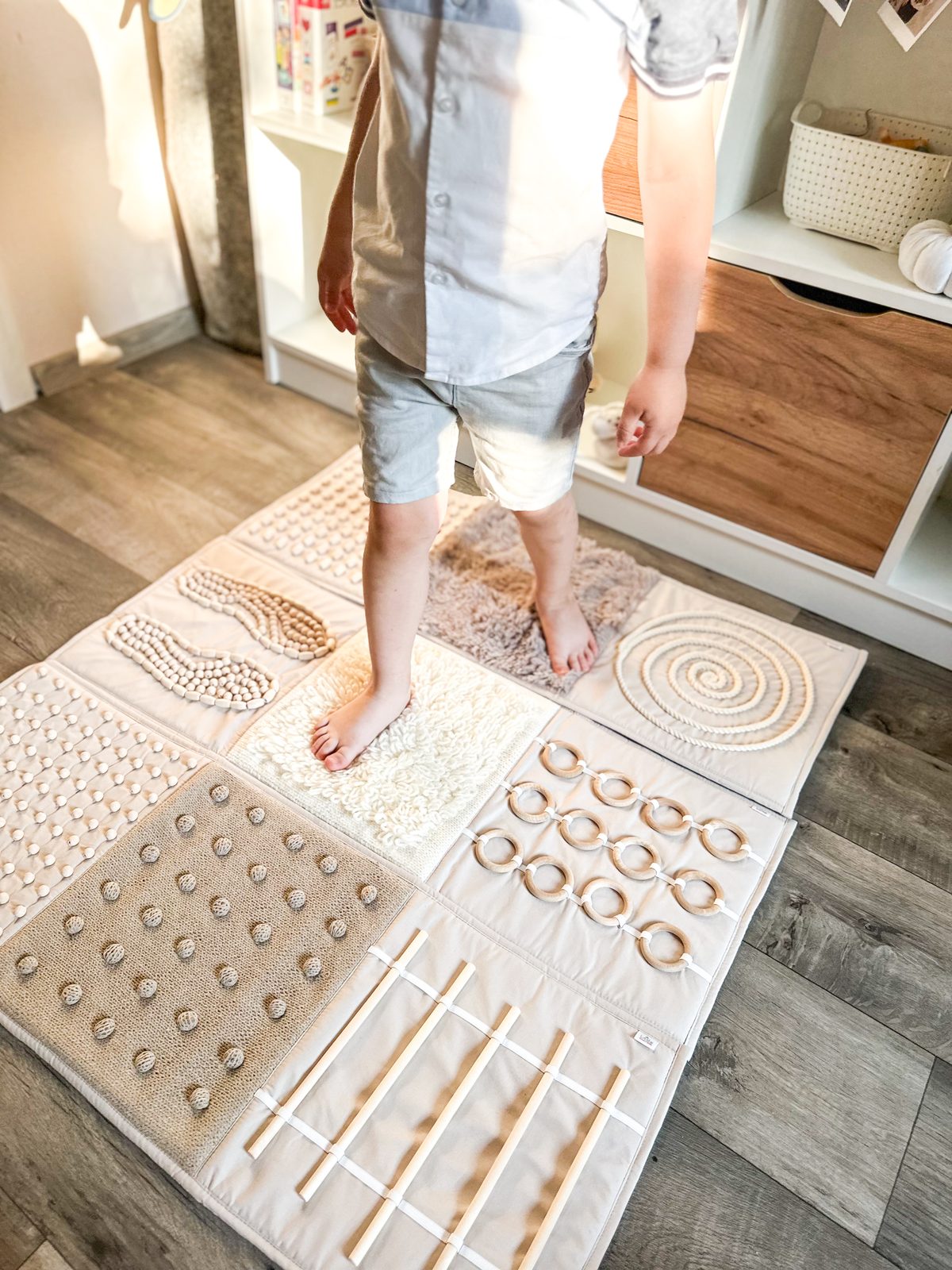
A simple cotton sensory mat with wooden teether rings = Montessori. A plastic activity gym with electronic music = not Montessori, no matter what the package says.
2. Open-Ended Purpose
The toy doesn't tell baby what to do. Baby decides. A wooden block can be a building piece, a hammer, a tower, a tunnel. A handmade sensory mat can be played on, looked at, walked on, talked to.
Compare: an electronic "Press Button A for color" toy has ONE thing it does. That's anti-Montessori — it gives the child no agency.
3. No Batteries, No Buttons, No Sound Effects
This is the easiest test. If the toy makes sound when you press it — it's not Montessori. Real Montessori toys are silent until the child engages them.
"But what about rattles?" Real Montessori rattles work because the CHILD shakes them. The toy doesn't make sound on its own. Different.
4. Real-World Connection
Toys should reflect real life. A wooden spoon (real). A small basket (real). A wooden teether shaped like a vegetable (real, sort of). A pink unicorn rainbow with flashing lights (not real — Montessori-style).
This matters because babies are figuring out how the world works. Real-shaped objects teach. Fantasy shapes confuse.
5. Beauty and Simplicity
Montessori toys are aesthetically calm. Soft colors, natural textures, no busy patterns. The toy is beautiful enough to leave out in the living room.
A loud, multi-colored, multi-feature toy violates Montessori principles even if it has "Montessori" on the box.
Common "Montessori" Marketing Lies
❌ "Montessori-Inspired" with Plastic
"Inspired by" means nothing. If it's plastic + Montessori = lie. Walk away.
❌ "Sensory Stimulating Lights & Sounds"
Anti-Montessori. Sensory engagement should come from the CHILD's exploration, not from the toy doing things.
❌ "Educational Tablet for Babies"
Maria Montessori didn't believe in screens for young children. Even modern Montessori schools restrict screen time. A "Montessori tablet" is a contradiction.
❌ "Develops 47 Skills"
Real Montessori toys teach ONE concept clearly. Multi-purpose "do everything" toys teach NOTHING well.
❌ "Bluetooth-Connected Montessori Toy"
Just no.
What Actually Counts as Montessori for Babies (0-2 Years)
For Newborns (0-3 months)
- High-contrast cotton mobile (handmade, no batteries)
- Wooden teether
- Cotton play mat with simple textures
- Real books with high-contrast images
For 3-6 months
- Sensory bags with different fillings
- Handmade cotton play mat with safe attached elements
- Wooden rattles
- Soft cloth ball
For 6-12 months
- Stacking cups (wooden or simple plastic)
- Object permanence box
- Sensory play mat with crinkle elements, hidden surprises
- Real-life household items (wooden spoon, small basket)
For 12-24 months
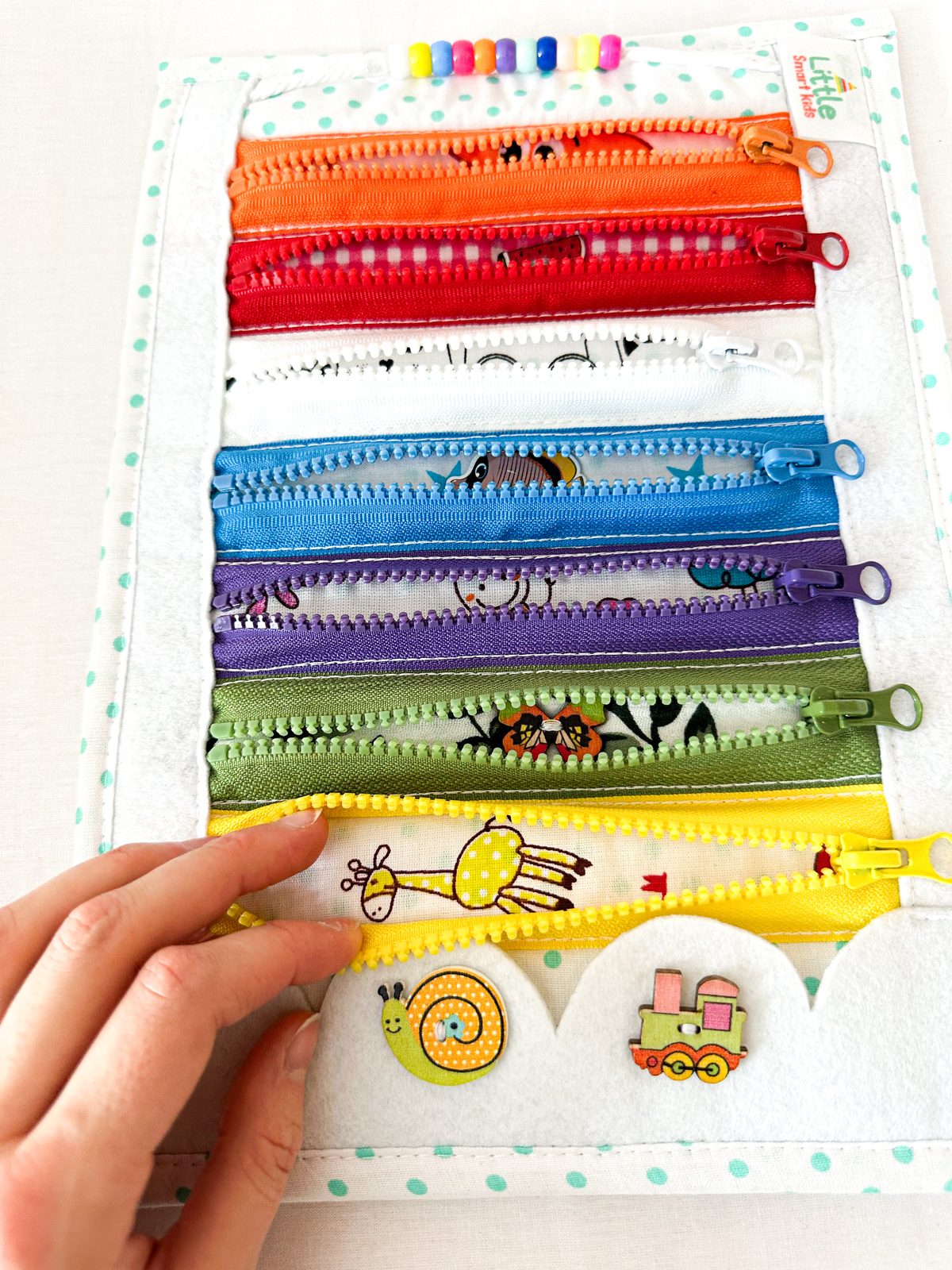
- Handmade busy boards with REAL zippers, buckles, snaps
- Sensory path mats for barefoot walking
- Toddler-sized tools (real, not plastic toy versions)
- Practical life materials (small pitcher for water, small broom)
Why Real Montessori Costs More
Plastic mass-produced "Montessori" toys cost $15-30. Real Montessori toys (natural materials, often handmade) cost $50-200. This isn't snobbery — it's the cost of:
- Real wood/cotton vs cheap plastic
- Handcraft vs assembly line
- Sustainability (heirloom, not throwaway)
- Small-batch production by real people
You buy ONE real Montessori toy. It lasts. It gets passed down. The plastic ones get replaced 4 times.
What We Make
Every piece in our Little Smart Kids collection follows real Montessori principles: natural cotton, open-ended use, no batteries, real wood elements where applicable, beautiful enough to leave in the nursery, designed by a mom who studied early childhood development.
Our handmade Busy Board has REAL zippers, REAL wooden beads. Our Sensory Path Mat uses real textures babies will encounter in nature. Our Baby Play Mat is cotton, not foam.
The Test for Any Toy
Before buying, ask:
- Is it made from natural materials?
- Can baby use it in multiple ways?
- Is it silent unless baby engages?
- Does it connect to something real in the world?
- Could you leave it on display in your living room?
4-5 yes = probably Montessori. 0-2 yes = marketing.
Maria Montessori would approve.
Browse real handmade Montessori-aligned toys at Little Smart Kids. Made by Karyna and her mom with natural materials, intentional design, and zero batteries.